Projects

Applied AI / ML projects.

Projects spanning hardware security, adversarial ML, LLM-assisted explainability, hyperdimensional computing, drug discovery, and ML systems. Each entry shows the problem, approach, result, and stack.

Featured Deep Dives

Selected research project deep dives.

Expanded context for selected work in hardware Trojan detection, adversarial attacks on ML-based security models, and scientific machine learning.

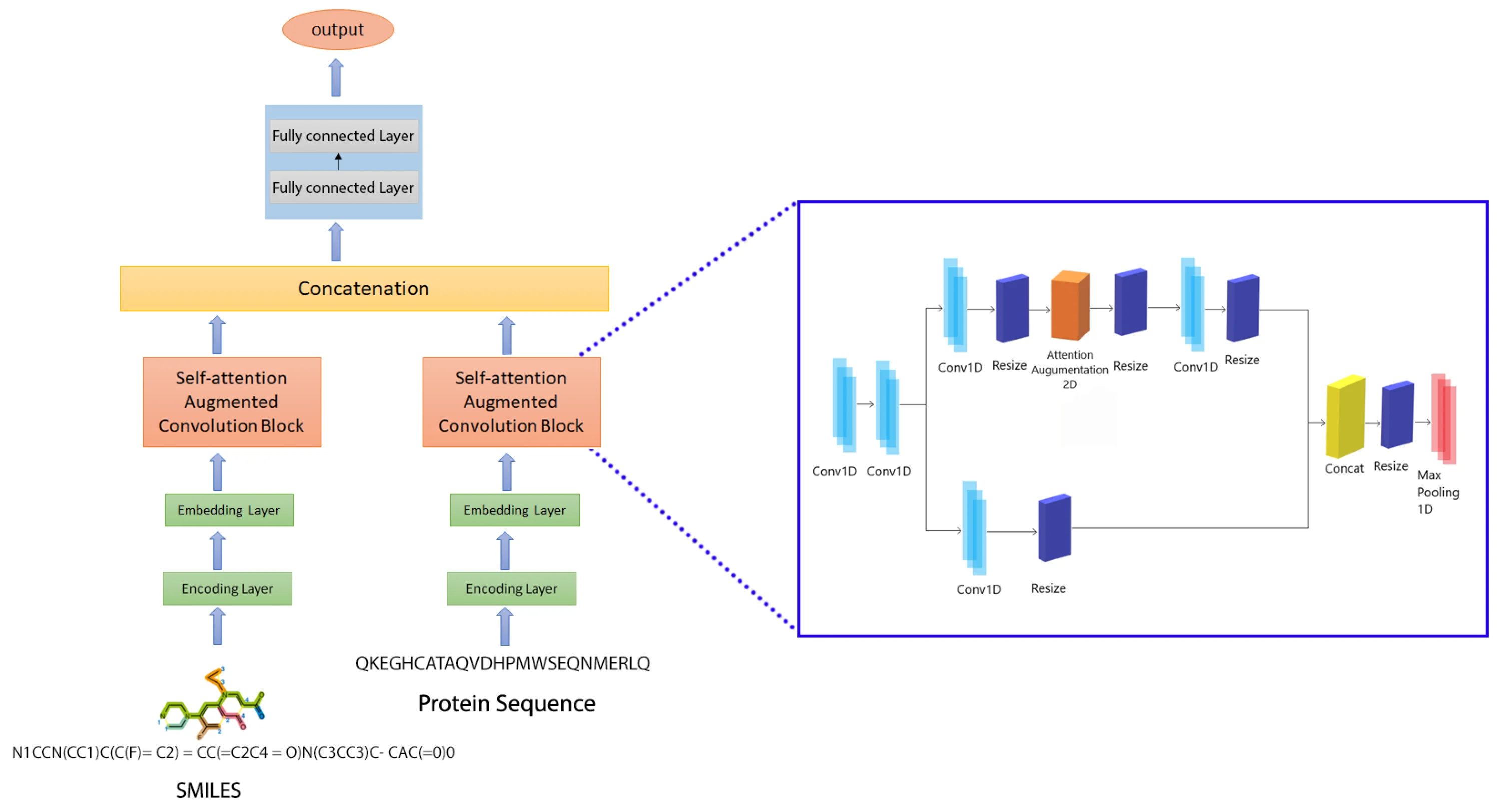
CSatDTA drug-target affinity prediction model visual
Open full figure
Drug Discovery IJMS, 2022

CSatDTA: Drug-Target Affinity Prediction

Drug discovery brings together chemistry, pharmacology, and biology to identify potential treatments. In early-stage drug development, predicting drug-target affinity is important because it helps estimate how strongly a drug candidate may interact with a biological target.

CSatDTA combines convolution with self-attention for molecular drug and target sequences. Convolution captures local sequence patterns, while self-attention helps model long-range interactions that standard convolution-only approaches can miss.

Comparative experiments showed that CSatDTA outperformed previous sequence-based and related approaches, demonstrating strong retention ability for drug-target affinity prediction.

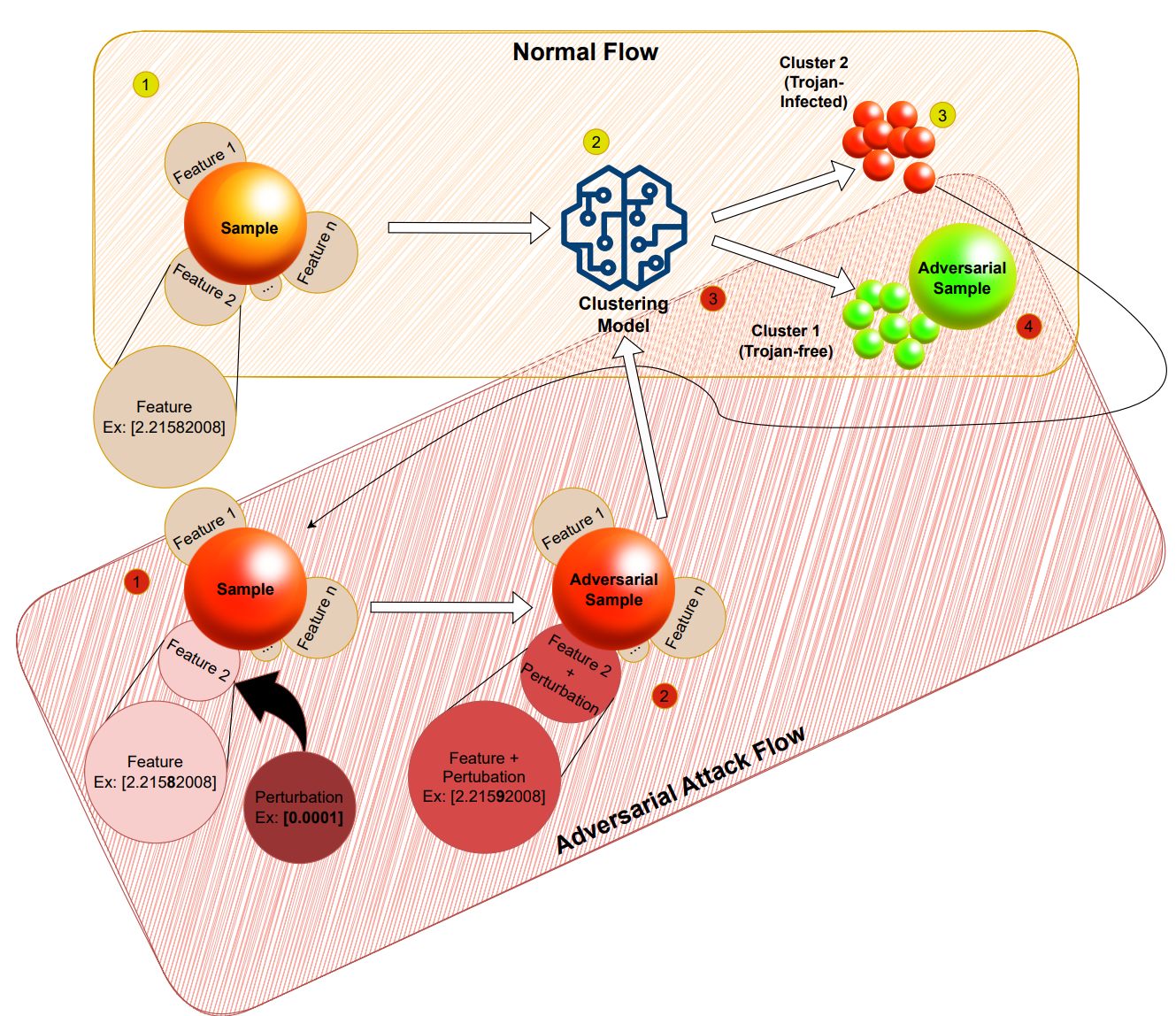
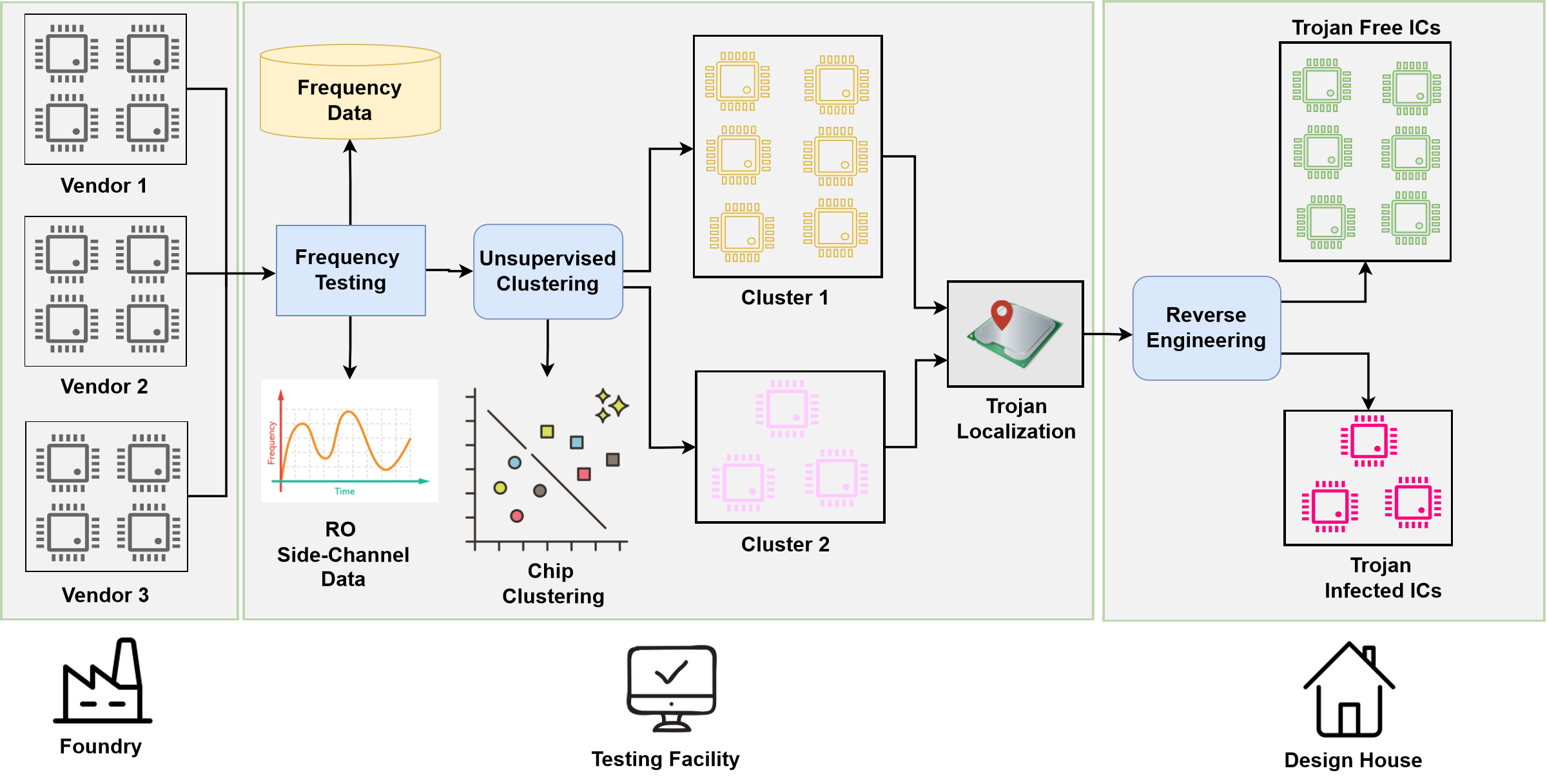
Adversarial attack flow against clustering-based golden reference-free hardware Trojan detection
Open full figure
Adversarial ML IEEE, 2024

Adversarial Attack Against Golden Reference-Free Hardware Trojan Detection Approach

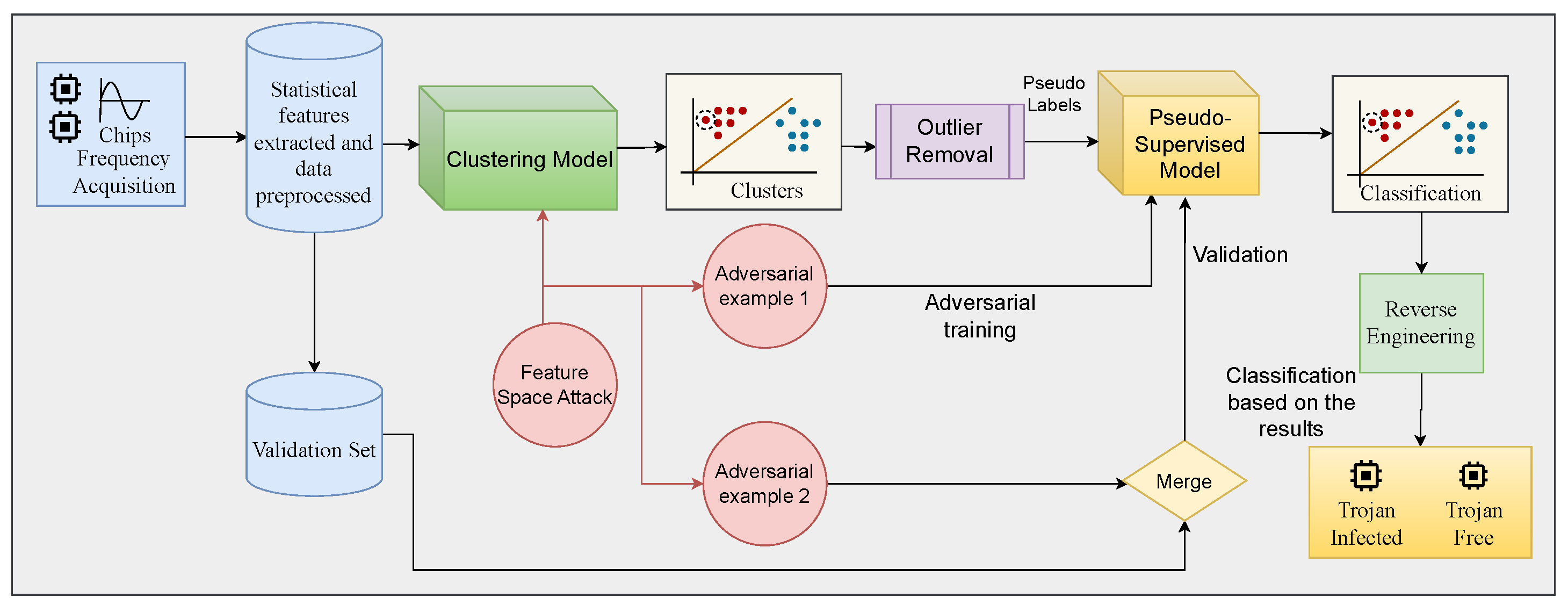
Golden reference-free hardware Trojan detection methods use unsupervised learning to identify suspicious ICs from untrusted manufacturing flows without relying on clean reference chips. This project asks what happens when the clustering model itself becomes the target of an adversarial attack.

The work introduces feature-space adversarial attacks against K-means clustering models trained on frequency side-channel analysis data. By generating adversarial samples, an attacker can alter Trojan behavior so that the clustering model assigns the source sample to a targeted cluster.

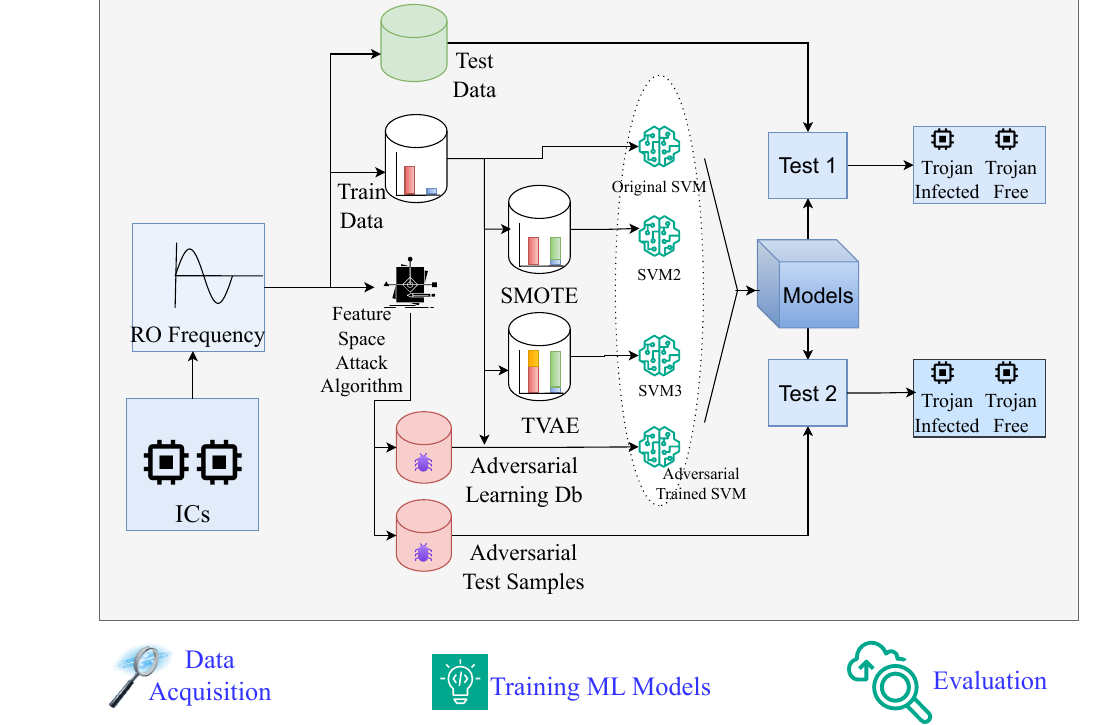
The study showed that the clustering model is highly vulnerable, with a 99% success rate in misleading the detector. The result is important because it exposes a weakness in otherwise practical golden reference-free detection pipelines and motivates robustness-aware hardware-security ML.

99% attack success rateK-means clusteringFrequency SCA